
What Vermont homes are up against.
NOAA National Centers for Environmental Information, Storm Events Database, bulk CSV export, events 2015-01-01 through 2024-12-31. · U.S. Census Bureau, 2020-2024 American Community Survey 5-Year Estimates

What a contractor has to work out before quoting a replacement is how much the existing unit has already been through. 1,748 severe weather events were recorded in Vermont between 2015 and 2024. That pace of demand adds up across the years a system is expected to last, and a unit that has spent its life pushing hard to recover loses capacity in ways that a visual inspection alone does not show. Where you are in the state affects the local version of that load, and a contractor who knows the area will read the equipment differently than one who does not.
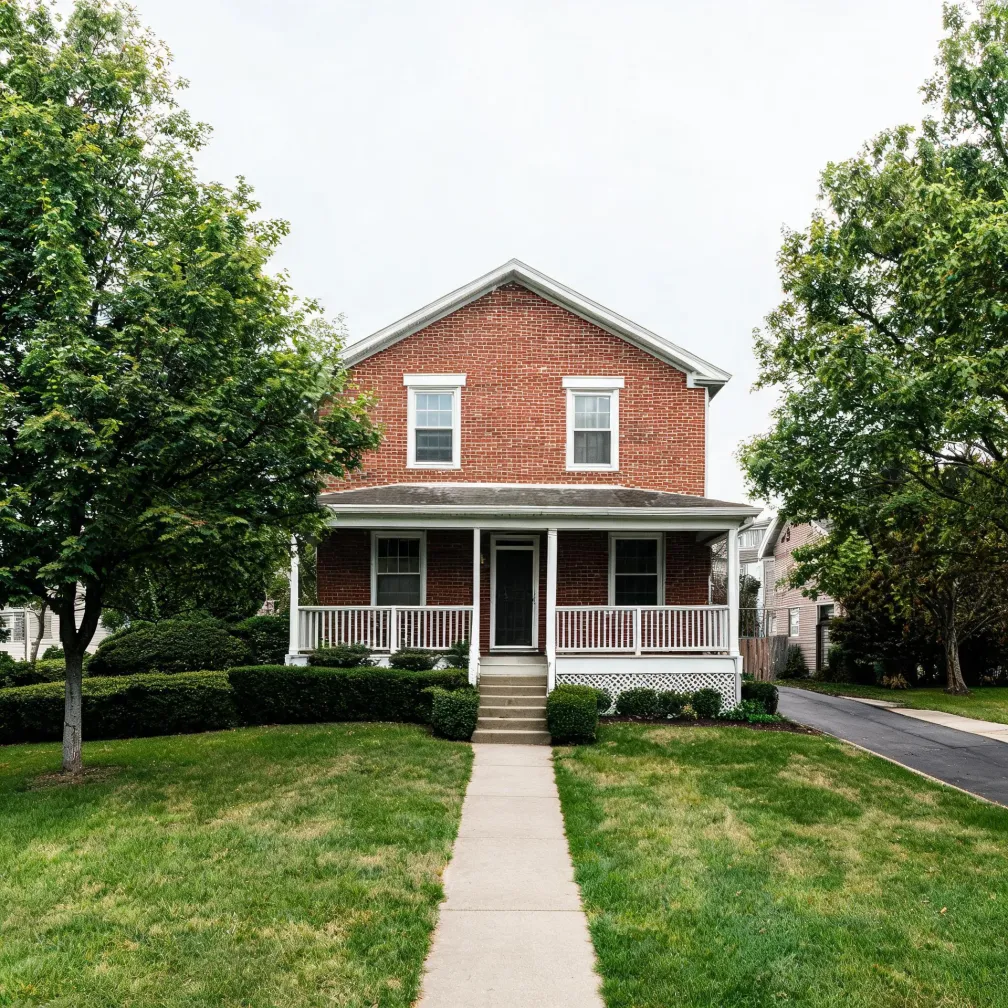
Before a contractor can size or specify equipment, they have to work out what is already in the house and whether it can carry the load. Ductwork laid in for heat alone is often undersized for cooling. Electrical service that was adequate for the original build may not have the capacity a modern AC unit draws. Half the homes in Vermont were built in 1976 or earlier (2020-2024 ACS 5-year). That means the typical Vermont house a contractor walks into has infrastructure that was designed without central air in mind, and the assessment has to happen before any equipment decision does.
Does your part of Vermont put harder demands on your HVAC?
2015–2024 · Source: NOAA National Centers for Environmental Information, Storm Events Database.
A condenser sitting outside in Vermont faces ice load, wind-driven debris, temperature swings wide enough to stress refrigerant lines, and summer humidity that strains coils already working at their limit. Equipment sized or positioned without accounting for those forces wears faster and fails at worse times. The contractor you are matched with knows what the conditions at your address actually ask of the equipment and specs the job accordingly.
Vermont HVAC Installation and Repair License Requirements
Vermont sets its own rules for who can perform HVAC installation and repair work, and the provisions below are drawn from state source material, not paraphrased. Read them as the standard a contractor working in Vermont is expected to meet.
Vermont splits the trade across two specialty licences and a contractor may hold one without the other: field A1 covers automatic gas or oil heating including geo-thermal and ground source heat pumps, and field C3 covers refrigeration or air conditioning including air-to-air heat pumps.
A state licensing requirement for this trade means the work is reserved for contractors who have qualified under Vermont law, not any willing handyman or unlicensed business. That applies to the work on your home too. The contractors this site routes requests to hold the license these provisions describe, and that is the filter a request passes through before it goes anywhere.
See the Vermont source provisions2 provisions
Vermont splits the trade across two specialty licences and a contractor may hold one without the other: field A1 covers automatic gas or oil heating including geo-thermal and ground source heat pumps, and field C3 covers refrigeration or air conditioning including air-to-air heat pumps.
Vermont reaches HVAC work through its electricians’ licence rather than an HVAC licence, and the requirement stops at the front door of a house: anyone performing electrical work in Vermont must be licensed as an electrician unless the work is in a residential building containing two or fewer dwelling units.