
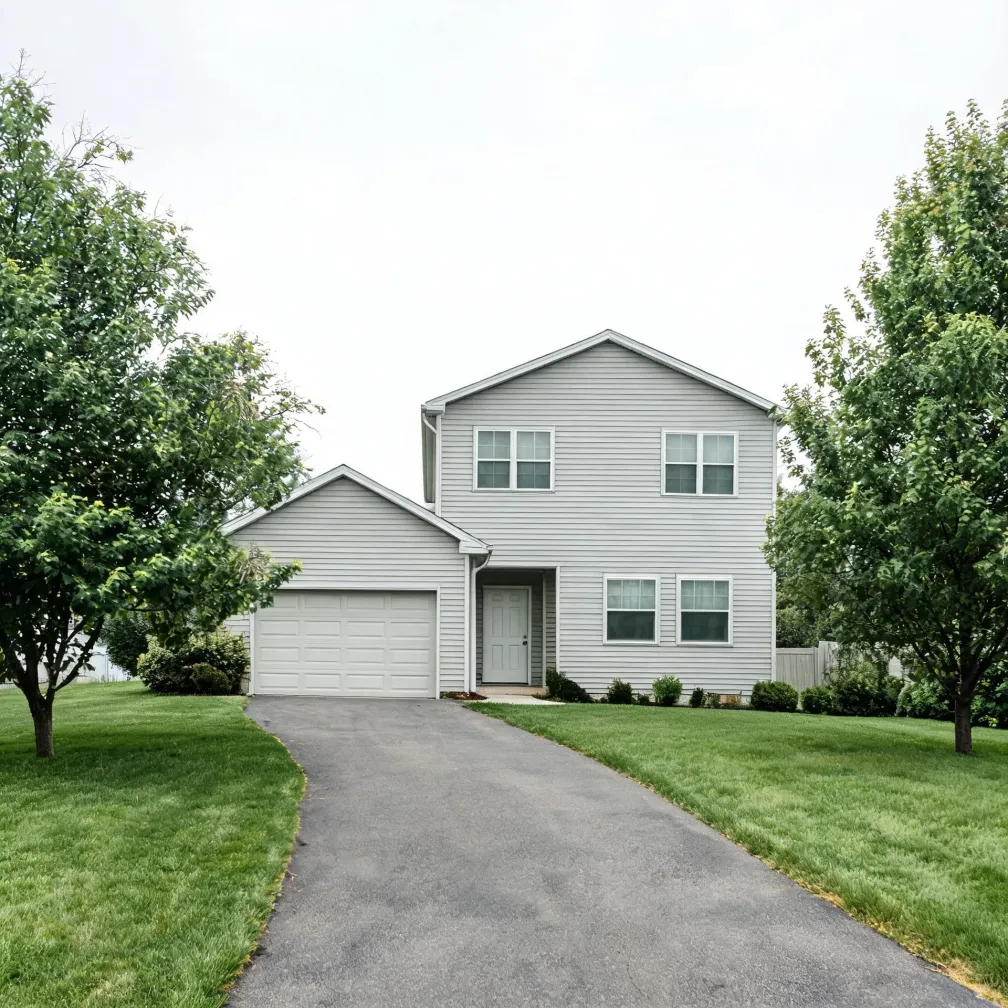
What Ohio homes are up against.
NOAA National Centers for Environmental Information, Storm Events Database, bulk CSV export, events 2015-01-01 through 2024-12-31. · U.S. Census Bureau, 2020-2024 American Community Survey 5-Year Estimates

A system that has been running against repeated severe weather demands does not arrive at replacement age in the same condition as one that has had an easier run, and a contractor quoting in Ohio has to figure out which situation they are looking at before a specification makes sense. 9,641 severe weather events were recorded in Ohio between 2015 and 2024. At that rate, the load on residential equipment adds up over the years a system is expected to last. What a contractor finds when they assess a unit reflects that accumulated demand, and it shapes both what they recommend and what the job will actually cost.
A quote for AC installation starts with what is already in the house, and in Ohio that means the ductwork and electrical service get assessed before any equipment is specified. Half the homes in Ohio were built in 1970 or earlier (2020-2024 ACS 5-year). A system sized for today's efficiency standards draws differently than what those circuits and runs were designed to carry. Contractors pull covers, measure airflow, and check service capacity because assuming compatibility produces an undersized or overstressed install.
Does your county put extra stress on HVAC equipment?
2015–2024 · Source: NOAA National Centers for Environmental Information, Storm Events Database.
Outdoor HVAC equipment in Ohio faces a real range of forces: summer heat loads that push a condenser hard, winter cold that tests a heat pump's capacity limits, hail and wind that damage coils and cabinet surfaces, and ice that strains drainage and refrigerant lines. A unit sized or positioned without accounting for local conditions will underperform or fail early. The contractor you are matched with knows how those conditions bear on equipment selection, siting, and installation for your property.
Ohio HVAC Installation and Repair License Requirements
Ohio sets its own rules for who can perform HVAC installation and repair work, and the provisions below come directly from state sources rather than any summary of them.
An Ohio home construction services contract must include a copy of the supplier's certificate of insurance showing general liability coverage of not less than two hundred fifty thousand dollars.
A state license for this trade exists to define who is legally permitted to do the work on your home. Sending a request to an unlicensed contractor puts that on you. The contractors this site routes to hold the license these provisions describe, and that is the filter every request passes through before it reaches anyone.
See the sourced Ohio provisions14 provisions
An Ohio home construction services contract must include a copy of the supplier's certificate of insurance showing general liability coverage of not less than two hundred fifty thousand dollars.
In Ohio a home construction service means the construction of a residential building, including the repair, improvement, remodel or renovation of an existing structure, and does not include construction on a structure containing four or more dwelling units except for work on an individual dwelling unit within it.
A home construction service supplier in Ohio is defined as a person who contracts with an owner to provide home construction services for compensation and who maintains a general liability insurance policy of not less than two hundred fifty thousand dollars.
The Ohio construction industry licensing board issues state licenses to individuals as heating, ventilating and air conditioning contractors, refrigeration contractors, electrical contractors, plumbing contractors and hydronics contractors.
An Ohio board of county commissioners may accept a valid and unexpired Chapter 4740 license held by a heating, ventilating and air conditioning contractor toward its own licensing requirements for work on one-, two-, or three-family dwelling houses.
An Ohio board of county commissioners may adopt rules licensing heating, ventilating and air conditioning contractors who are not required to hold a state license under Chapter 4740.
In Ohio municipal law a specialty contractor includes heating, ventilating and air conditioning contractors, refrigeration contractors, electrical contractors, plumbing contractors and hydronics contractors.
An Ohio board of county commissioners may not register a specialty contractor who is required to hold a license under Chapter 4740 but does not hold a valid one.
An Ohio municipal corporation may not register a specialty contractor who is required to hold a license under Chapter 4740 but does not hold a valid one.
In Ohio building law a residential building means a one-family, two-family or three-family dwelling house and any accessory structure incidental to it, and does not include an industrialized unit, a manufactured home or a mobile home.
Ohio's contractor licensing chapter reaches only work on a construction project, and a construction project is defined to exclude residential buildings, so an HVAC contractor working on a one-, two-, or three-family dwelling in Ohio falls outside the state licensing requirement.
Violating Ohio's contractor licensing prohibition is a minor misdemeanor on a first violation and a misdemeanor of the fourth degree on subsequent violations.
Under Ohio law no person may act as or claim to be a type of contractor that Chapter 4740 licenses unless that person holds a license issued under that chapter.
In Ohio a home construction service supplier may not perform a home construction service costing twenty-five thousand dollars or more without entering into a written home construction services contract with the owner, unless the supplier and owner enter into a cost-plus contract.